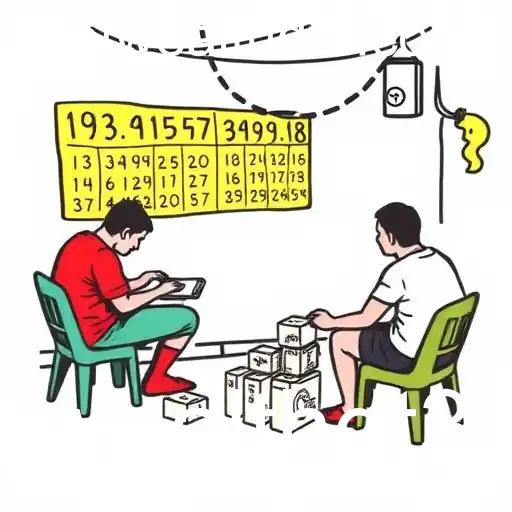
Jueteng and Its Cultural Impact
Jueteng is a number game that has become ingrained in certain cultures, primarily in the Philippines. Despite its illegal status, the game has thrived due to its cultural significance and the socio-economic factors that drive people to participate. It is a form of gambling that is not only a game but a system intertwined with the lives of many.
The Origin and Mechanics of Jueteng
The origins of Jueteng can be traced back to Chinese immigrants who introduced the game during the Spanish colonial period. The game has persisted through generations and adapted to local cultures. The mechanics are straightforward, involving bets on combinations of numbers ranging from 1 to 37. Draws are conducted twice daily, and winners are paid based on their stake and the odds offered by bet collectors, often referred to as "bookies." The simplicity of its rules and the quick turnover make it attractive to numerous participants.
Cultural Significance
Jueteng's continued prevalence despite its illegal status is a testament to its cultural embedding. It provides a sense of community, serving as both entertainment and a communal activity. In many areas, it acts as a social equalizer where socio-economic status, including the notion of wealthdt3, is irrelevant. Everyone stands a chance to win, making it all the more appealing. The game is deeply embedded in the everyday life of local communities, influencing their decisions and interactions.
Socio-Economic Factors
Economic hardships and pervasive poverty are critical factors driving people to engage in Jueteng. For many, it presents a semblance of hope and possibility. It serves as a financial crutch, promising potential relief from poverty. Despite its risks, the lure of a better life through potential winnings can be overwhelmingly persuasive. Additionally, the game supports an intricate network of employment within communities, even though it operates outside the realm of the formal economy.
Regulation and Control
Attempts to control and regulate Jueteng have encountered various challenges. Some argue for strict enforcement of its illegal status, while others propose its legalization to enable regulation and taxation. Legalization could transform the game into a legitimate sector contributing to the economy. However, such measures face resistance due to entrenched political interests and the complex structure of corruption that benefits from its illegal status.
Corruption and Jueteng
Corruption related to Jueteng extends to various echelons of governance. Officials often receive bribes to allow operations to continue unimpeded. This corruption network creates a cycle that becomes increasingly difficult to dismantle. The game's deep-rooted presence means that government officials may turn a blind eye, accepting bribes and letting the system function smoothly despite official policies.
Public Perception and Media Influence
The perception of Jueteng is often divided. While it is seen as a vice by some, others view it as a part of their cultural heritage. Media portrayal plays a substantial role in shaping public perception, either demonizing players and operators or highlighting the socio-economic realities that compel involvement in such activities. Comprehensive narrative balance is crucial to understanding Jueteng's role in society.
Future Prospects of Jueteng
The future of Jueteng hinges on socio-economic developments and evolving cultural perspectives. Potential pathways could involve strategic policy decisions that address root economic issues that compel participation. Should socioeconomic conditions improve, reliance on such games might decrease, reflecting a broader change in social and economic dynamics.